Course Overview: The Language of Maltese (Semitic)
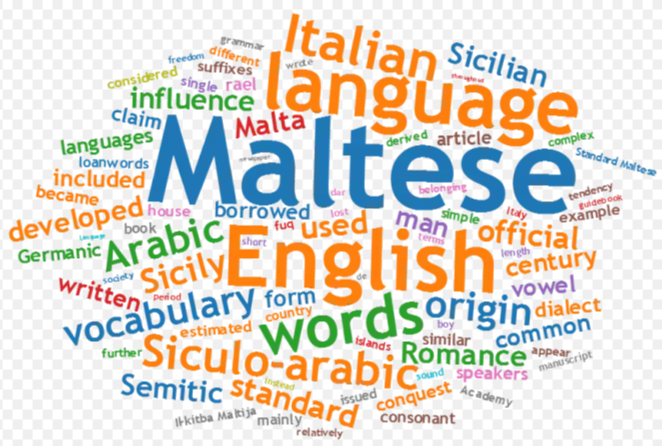
- Maltese language is a unique Semitic language spoken by over 500,000 people, primarily in Malta. Maltese is the only official Semitic language in the European Union and the national language of Malta and the only Semitic language written in the Latin alphabet.
- Blending influences from Arabic, Italian, and English, Maltese offers a fascinating window into Mediterranean history and culture.
- Through interactive lessons, learners will build foundational skills in speaking, listening, reading, and writing, while exploring Maltese customs, traditions, and expressions used in everyday life. The course will also highlight Malta’s multilingual environment and its impact on communication and identity.
- By the end of this course, learners will be able to hold simple conversations, understand basic texts, and appreciate the cultural richness embedded in the Maltese language.
- Develop basic listening, speaking, reading, and writing skills.
Course Objectives:
- Understand and use everyday vocabulary.
- Introduce oneself and others.
- Understand basic grammar and sentence structures.
- Communicate more freely in everyday situations and dialogues.
- Write and understand simple texts, sentences and questions in the present tense.
- Discuss personal interests and experiences.
- Recognize and correctly pronounce Maltese letters and sounds.
- Use basic greetings, introductions, and polite expressions.
- Understand basic vocabulary related to daily activities, food, travel, and family.
- Appreciate key aspects of Maltese culture, geography, and traditions.
Course Materials
- Learning Resources:
Textbooks & Online Materials
Learn Maltese: A Beginner’s Grammar and Workbook – by Joseph M. Brincat
Il-Lingwa Maltija: Basic Course in Maltese – University of Malta Open Access
Maltese for Foreigners (A1–A2) – National Council for the Maltese Language
Audio & Video Resources
YouTube Channels:
Learn Maltese with Ruth
Maltese 101 by LanguageTransfer
Podcasts:
Maltese LinguaCast
L-Għajn ta’ Malta
Digital Tools & Apps
Duolingo (Maltese beta course in development)
Glossika Maltese (for listening and repetition drills)
Memrise – Maltese Basics (community-made lessons)
Google Translate (useful for quick vocabulary, with caution)
Cultural Immersion
Watch Maltese films or TV: L-Għarusa, Simshar, Ħelwa
Listen to Maltese music artists: Ira Losco, The Travellers, Red Electrick
Follow Maltese news portals (e.g., Times of Malta, TVM)
Target Audience
- Target Audiences for Learning Maltese
1. Maltese Residents
Who: Children, teenagers, adults, and families living in Malta
Why:
Cultural and national identity: Maltese is integral to Malta’s cultural heritage and national pride.
Government and civic engagement: Many official documents, services, and legal matters are conducted in Maltese, and it’s a significant language in local governance.
Daily communication: While English is widely spoken, Maltese remains the language of choice in many households and communities.
Educational requirements: Students are often required to learn Maltese as part of their school curriculum.
2. Maltese Diaspora
Who: Maltese people living abroad, particularly in countries like Australia, Canada, the UK, and the USA
Why:
Reconnecting with heritage: Maltese emigrants and their descendants often seek to reconnect with their roots, reclaiming linguistic ties to their ancestors.
Family and community ties: Second- or third-generation Maltese speakers often wish to understand their cultural heritage and communicate with older generations.
Preserving culture and identity: Maltese diaspora communities work to maintain their cultural legacy, and language is a key part of that effort.
3. Language Enthusiasts and Linguists
Who: Polyglots, linguists, and people with an interest in rare or unique languages
Why:
Linguistic curiosity: Maltese is the only official Semitic language in the European Union, combining influences from Arabic, Romance languages (Italian, particularly Sicilian), and English, making it a fascinating subject of study.
Comparison with other Semitic languages: Researchers studying other Semitic languages (like Arabic or Hebrew) often study Maltese as a comparative tool due to its unique evolution.
Philological studies: Academics interested in language evolution, morphology, and phonetics find Maltese to be a valuable case study.
4. Students of Mediterranean and European Studies
Who: University students or researchers specializing in Mediterranean studies, European Union studies, or language evolution
Why:
Understanding Malta’s history: Learning Maltese provides deeper insight into Malta’s history, culture, and society, which have been shaped by diverse influences over the centuries (e.g., Arabic, Norman, Italian, British).
EU linguistics and policy: As an EU language, understanding Maltese offers a unique perspective on EU language policies, language revitalization, and language rights in the Mediterranean region.
Literature and folklore: Students may wish to study Maltese literature, folklore, and poetry in the original language.
5. Tourists and Visitors to Malta
Who: Travelers interested in the history, culture, and unique aspects of Malta
Why:
Cultural immersion: Tourists who wish to immerse themselves more fully in the local culture often study Maltese to interact with residents and gain a deeper understanding of the island.
Engagement in local experiences: Understanding a few key phrases or expressions in Maltese can enrich the experience at local festivals, markets, or interactions with residents.
Historical and cultural curiosity: Malta is rich in history, and many visitors are fascinated by its blend of Mediterranean cultures. Learning Maltese enhances visits to historical sites and museums.
6. Teachers and Educators
Who: Educators teaching Maltese language and literature in schools, universities, or language schools
Why:
Promote Maltese language learning: Educators who want to teach Maltese as part of the national curriculum or as a second language to foreigners.
Curriculum development: Teachers may need to update or develop courses and materials for both Maltese-speaking and non-Maltese-speaking students.
Cultural exchange programs: Educators working in Malta or with Maltese-speaking communities abroad will find that knowledge of Maltese is crucial for their work.
7. Business Professionals
Who: Individuals involved in business or professional fields in Malta
Why:
Local business engagement: As Malta is a hub for finance, tourism, and international trade, professionals may benefit from speaking Maltese to communicate effectively with local businesses and clients.
Public relations and customer service: Businesses in Malta often have a bilingual workforce, and speaking Maltese can enhance relations with local communities.
Employment opportunities: Fluency in Maltese is often required for public-sector positions and certain private sector jobs in Malta.
8. Language Revivalists and Activists
Who: Individuals or groups involved in the promotion and revitalization of Maltese
Why:
Cultural preservation: Language is a central part of Malta’s cultural heritage, and efforts to revitalize the Maltese language are critical for ensuring its continued use in future generations.
Community and policy advocacy: Maltese language activists focus on promoting Maltese in education, media, and public life to prevent language attrition and maintain its place in Maltese society.
Language rights: Advocacy for Maltese language rights, including the right to use the language in all public and private spheres.
9. Government and Non-Governmental Organizations (NGOs)
Who: Employees and volunteers working in government, social services, and community outreach in Malta
Why:
Civic participation and communication: Maltese is one of the official languages of the government and is used in legal, administrative, and public service contexts.
Engagement with Maltese-speaking communities: Government agencies and NGOs often work with local Maltese-speaking populations and may require staff to speak Maltese fluently for outreach, education, and support purposes.
10. Expats and Immigrants in Malta
Who: Foreign nationals and long-term residents in Malta
Why:
Integration into Maltese society: Learning Maltese allows expats and immigrants to connect more deeply with their new home and culture, helping with integration into the community.
Social and professional networking: Many Maltese people are bilingual in both Maltese and English, and learning the local language enhances social and professional relationships.
Course Duration
- 2-8 weeks (2-hour sessions per week)
Course Content
Course Includes
- 7 Lessons
Login
Accessing this course requires a login. Please enter your credentials below!